


CME/CE Accreditation Information
TITLE
Beyond Platinum: What's Next in Relapsed ES-SCLC?
PROGRAM PARTNERS
This activity is jointly provided by Albert Einstein College of Medicine-Montefiore Medical and RealCME



ACKNOWLEDGEMENT OF FINANCIAL SUPPORT
This activity is supported by an educational grant from Daiichi Sankyo and Merck.
Release Date: October 9, 2026
Expiration Date: October 9, 2027
STATEMENT OF NEED
Despite recent advancements, extensive-stage small-cell lung cancer (ES-SCLC) is characterized by rapid disease progression and high relapse rates following first-line platinum-based chemotherapy and immunotherapy. The therapeutic landscape for relapsed ES-SCLC is rapidly evolving beyond traditional chemotherapy with the emergence of novel biomarker-directed therapies targeting surface antigens such as DLL3 and B7-H3. However, clinical awareness of these emerging targets, their underlying biologic rationale, and their differing expression patterns across SCLC subtypes remains limited. Furthermore, as the availability of approved agents, such as the DLL3-targeted T-cell engager tarlatamab, and investigational antibody-drug conjugates (ADCs) expands, clear, evidence-based frameworks to guide treatment selection and sequencing are not well established. Clinicians currently face challenges interpreting clinical trial data and differentiating among therapies with distinct mechanisms of action in the absence of robust head-to-head comparative trials.
As these diverse therapeutic classes enter clinical practice, they introduce novel, class-specific toxicity profiles that differ significantly from those of traditional treatments. For instance, ADCs are associated with unpredictable, off-tumor toxicities such as interstitial lung disease (ILD) and myelosuppression, whereas T-cell engagers present risks for early-onset, on-target immune toxicities like cytokine release syndrome (CRS) and immune effector cell-associated neurotoxicity syndrome (ICANS). Currently, practical SCLC-specific guidance on monitoring and mitigating these adverse events is limited, leaving clinicians underequipped to safely manage these new therapies. Consequently, there is a critical need for targeted education that bridges these biologic and practical gaps, equipping healthcare providers with the knowledge to evaluate investigational data, establish optimal sequencing strategies, and implement appropriate safety management protocols for biomarker-driven therapies in relapsed ES-SCLC.
EDUCATIONAL OBJECTIVES
- DESCRIBE the biologic rationale and therapeutic relevance of emerging targets in relapsed ES-SCLC
- INTEGRATE emerging clinical trial data to inform treatment selection and sequencing strategies following progression on platinum-based chemotherapy and immunotherapy
- IMPLEMENT appropriate monitoring and management strategies to address class-specific toxicities associated with emerging biomarker-directed therapies in ES-SCLC
TARGET AUDIENCE
Medical and thoracic oncologists and oncology APPs who treat patients with SCLC in the academic and community settings.
FACULTY
 |
Narjust Florez, MD, FASCO Associate Director of The Cancer Care Access Program Co-Director, Young Lung Cancer Program Thoracic Medical Oncologist, Dana-Farber Cancer Institute Assistant Professor of Medicine, Harvard Medical School |
| Disclosure(s): | Received honoraria for serving as an advisor from Regeneron and Summit Therapeutics; received honoraria from Nuvation Bio, Nuvalent and Boehringer Ingelheim for serving as an advisor and site principal investigator for a clinical trial; received a research grant for serving as a researcher from AstraZeneca, Pfizer and Daiichi-Sankyo; received an honoraria for serving as an advisor from Novocure, Lilly, Amgen and Jazz Pharmaceuticals. |
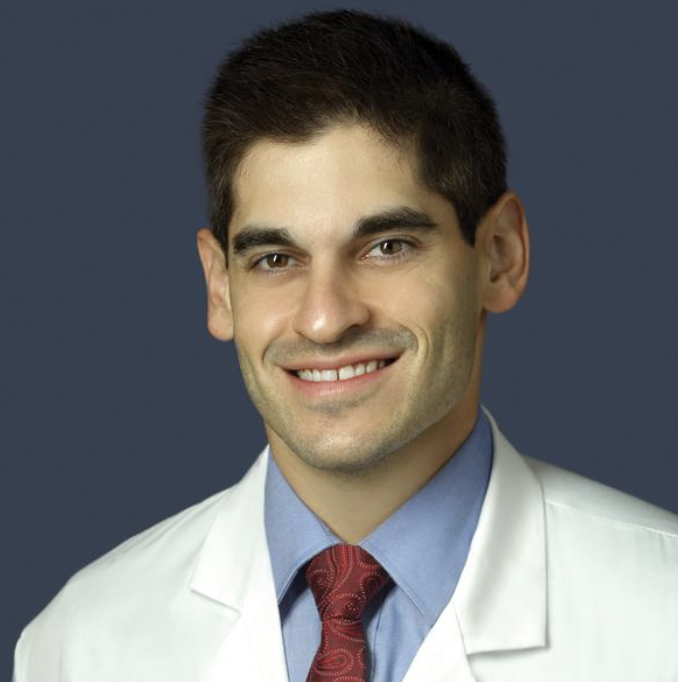 |
Joshua E. Reuss, MD Director of Thoracic Clinical Research Assistant Professor of Medicine Georgetown Lombardi Comprehensive Cancer Center |
| Disclosure(s): | Received honoraria for serving as an advisor from AstraZeneca, BMS, Daiichi Sankyo, Gilead, Janssen, Regeneron, Pfizer, Lilly, Natera, Merck, EMD Serono, Roche Diagnostics, Nuvation Bio, Guardant, Summit, AbbVie, and Boehringer Ingelheim; served as a clinical trial principal investigator with research funding provided to the institution by Genentech/Roche, Verastem, Nuvalent, Arcus, Revolution Medicines, Regeneron, Amgen, Duality Bio, Onco-C4, Sutro, and Genmab. |
CONTENT REVIEWER
Victor B Hatcher, PhD
Research Director
Montefiore Medical Center
Associate Dean
Professor of Biochemistry and Medicine
Albert Einstein College of Medicine
Bronx, NY
Victor B. Hatcher, PhD, has no relevant financial relationships with ACCME-defined ineligible companies during the past 24 months.
PLANNERS
Steven Haimowitz, MD - RealCME
Steven Haimowitz, MD, has no relevant financial relationships with ACCME-defined ineligible companies during the past 24 months.
Erika L Kunz, PharmD
Erika L Kunz, PharmD, has no relevant financial relationships with ACCME-defined ineligible companies during the past 24 months.
DISCLOSURE OF FINANCIAL RELATIONSHIPS
The “Policy on Identification, Mitigation, and Disclosure of Relevant Financial Relationships” of Albert Einstein College of Medicine-Montefiore Medical Center requires that any individual in control of content, including faculty, participating in CME activities disclose to the audience all relevant financial relationships with ineligible companies* in the past 24 months. Any individual in control of content who refuses to disclose, or whose disclosed relationships prove to create a conflict of interest, will be recused.
Individuals with the absence of relevant financial relationships with ineligible companies will be disclosed to the audience.
All financial relationships of individuals in a position to control the content of this CME activity are identified and mitigated prior to the educational activity.
*The ACCME defines an ineligible company as those whose primary business is producing, marketing, selling, re-selling, or distributing healthcare products used by or on patients.
ACCREDITATION STATEMENT

In support of improving patient care, this activity has been planned and implemented by Albert Einstein College of Medicine-Montefiore Medical Center and RealCME, LLC. Albert Einstein College of Medicine-Montefiore Medical Center is jointly accredited by the Accreditation Council for Continuing Medical Education (ACCME), the Accreditation Council for Pharmacy Education (ACPE), and the American Nurses Credentialing Center (ANCC), to provide continuing education for the healthcare team.
CREDIT DESIGNATION STATEMENT
Albert Einstein College of Medicine-Montefiore Medical Center designates this other/blended activity for a maximum of 4.75 AMA PRA Category 1 Credits™. Physicians should claim only the credit commensurate with the extent of their participation in the activity.
Other Credits
American Nurses Credentialing Center (ANCC) accepts AMA PRA Category 1 Credit™ from organizations accredited by the ACCME.
American Academy of Nurse Practitioners National Certification Program accepts AMA PRA Category 1 Credit™ from organizations accredited by the ACCME.
American Academy of Physician Assistants (AAPA) accepts certificates of participation for educational activities certified for AMA PRA Category 1 Credit™ from organizations accredited by ACCME or a recognized state medical society.

American Board of Internal Medicine's (ABIM) Maintenance of Certification (MOC) Program
Successful completion of this CME activity, which includes participation in the evaluation component, enables the participant to earn up to 4.75 Medical Knowledge MOC points in the American Board of Internal Medicine’s (ABIM) Maintenance of Certification (MOC) program. Participants will earn MOC points equivalent to the amount of CME credits claimed for the activity. It is the CME activity provider’s responsibility to submit participant completion information to ACCME for the purpose of granting ABIM MOC credit.
DISCLOSURE OF UNLABELED USE
This activity may or may not discuss investigational, unapproved, or off-label use of drugs. Participants are advised to consult prescribing information for any products discussed. The information provided in this CME activity is for continuing education purposes only and is not meant to substitute for the independent medical judgment of a clinician relative to diagnostic and treatment options for a specific patient’s medical condition.
DISCLAIMER
The opinions expressed in the educational activity are those of the faculty and do not necessarily represent the views of Albert Einstein College of Medicine-Montefiore Medical Center, RealCME, Daiichi Sankyo and Merck. Please refer to the official prescribing information for each product for discussion of approved indications, contraindications, and warnings.
METHOD OF PARTICIPATION/INSTRUCTIONS ON HOW TO RECEIVE CREDIT
Estimated time to complete this activity: 4.75 hours
To obtain credit, a score of 70% or better on the Final Assessment is required. This activity is offered at no cost to participants. Please proceed with the activity until you have successfully completed this curriculum, answered all test questions, completed the Final Assessment, Post Group Assessment, and evaluation, and have received a digital copy of your credit certificate.
- Baseline/Final Assessments: 30 minutes each for a total of up to 1.00 hour of CME
- Three (3) Self-Study Modules: 15 minutes each for a total of up to 0.75 hour of CME
- Two (2) Live Group Discussions: 45 minutes each for a total of up to 1.50 hour of CME
- Two (2) Group Challenges: 30 minutes each for a total of up to 1.00 hour of CME
- Action Plan (1) development: 30 minutes for a total of 0.50 hour of CME
If you are seeking credit, you must complete the assessment and evaluation at the conclusion of the activity. Your certificate can be printed immediately.
PRIVACY STATEMENT
Albert Einstein College of Medicine-Montefiore Medical Center, Center for Continuing Professional Development (Einstein-Montefiore) protects the privacy of personal and other information regarding participants and education collaborators. Einstein-Montefiore will not release personally identifiable information to a third party without the individual’s consent, except such information as is required for reporting to the ACCME. Einstein-Montefiore maintains physical, electronic, and procedural safeguards that comply with federal regulations to protect against the loss, misuse, or alteration of information collected from you.
COLLECTION AND USE OF YOUR PERSONAL INFORMATION
The submission of certain personally identifiable information is necessary to award and track the credits participants may earn after completing an activity. Required items include first name, last name, middle initial, degree, email address, address and phone number. These items are necessary. Participants are also required to complete an evaluation of each activity. All evaluative information submitted is collected, retained, and used by Einstein-Montefiore to continuously improve the learning experience. Einstein-Montefiore will not transfer, sell, or share personal information with outside parties or otherwise disclose personal information unless required to in a legal process. Einstein-Montefiore will retain your personal data only for the period necessary to accomplish the stated purposes and to comply with applicable laws.
CONTACT INFORMATION
For questions regarding CME credit, contact Albert Einstein College of Medicine-Montefiore Medical Center at cme@montefiore.org.
For technical questions related to this activity, please contact support@gathered.com.

